 Hikaku
Virtual staging, virtual twilight and AI edits: how to spot them in listing photos
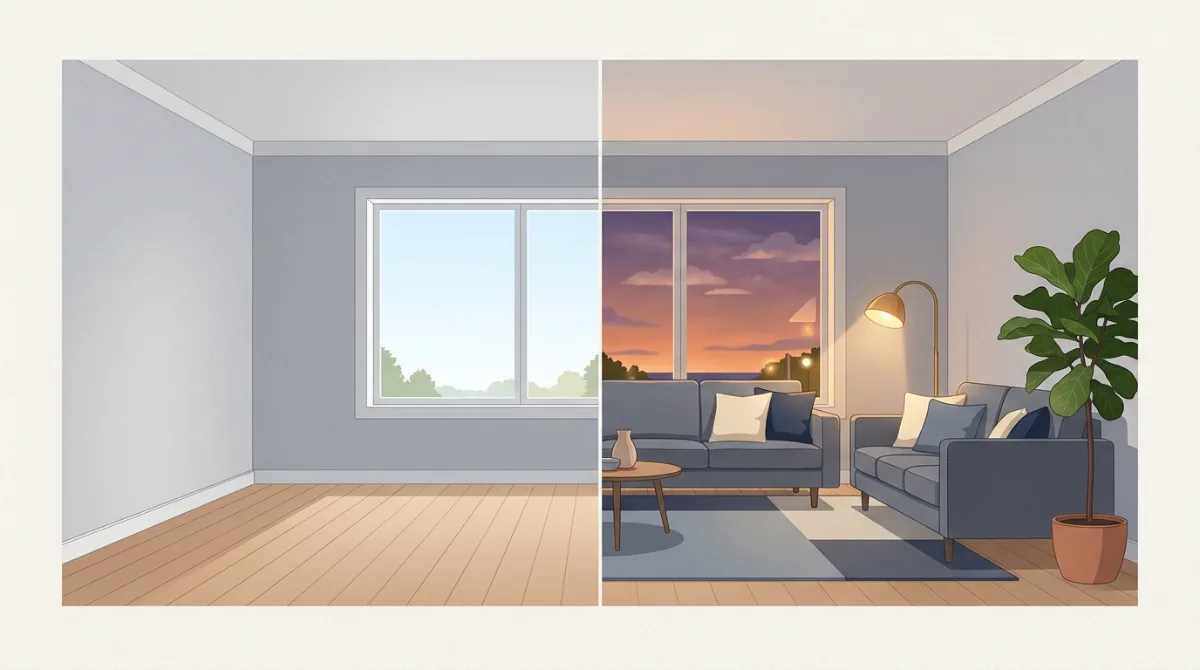
Listing photos have always been edited. What has changed is how easy it is. AI tools can furnish an empty room, turn a gray afternoon into a glowing sunset, or erase a power line in seconds. Most of that is fine when it's disclosed. Some of it isn't. Here's how to tell what you're looking at.
What is virtual staging?
Virtual staging means adding furniture and decor to photos of an empty room. It used to be a job for a designer working photo by photo; now AI apps do it in seconds. Done honestly and labeled as staged, it helps buyers picture how a space could be used.
Virtual staging vs real staging
| Real staging | Virtual staging | |
|---|---|---|
| What it is | Furniture is brought into the house and photographed | Furniture is added to the photos afterward |
| Cost and time | Higher: rental, movers and setup | Much lower, often same day |
| At the showing | The rooms look like the photos | The rooms are empty or furnished differently |
| Disclosure | Not needed | The photos should be labeled as virtually staged |
What is virtual twilight?
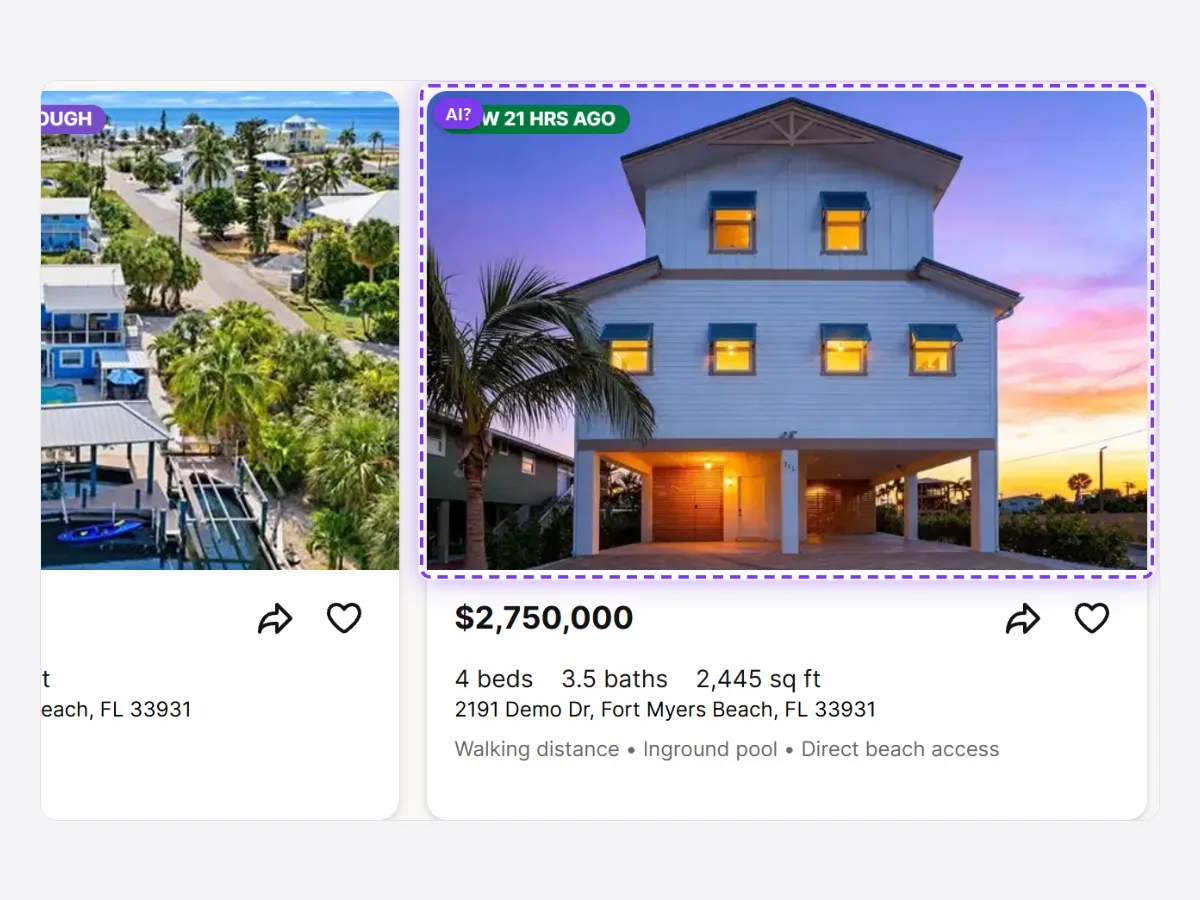
Twilight photos are taken at dusk, when the sky turns blue and orange and the lights inside glow. They look warm and expensive, which is why agents like them. Virtual twilight fakes the effect from a daytime photo: replace the sky, darken the scene and add a glow to every window. It is far cheaper than a real twilight shoot, and it is now often done with AI.
When editing crosses the line
Usually fine: color and exposure fixes, straightened lines, a brighter sky on an otherwise accurate photo, and clearly labeled virtual staging.
Misleading: removing permanent features such as power lines, a cell tower or the building next door; hiding cracks or water stains; changing the view; generating rooms or finishes that don't exist; and unlabeled staging that covers up a room's condition.
Many MLSs and brokerages require virtually staged or digitally altered photos to be labeled, and edits that hide a property's condition can count as misrepresentation. The exact rules vary, so check the ones that apply to you.
How to spot edited or AI-generated listing photos
- Compare the photos with each other. A twilight exterior next to bright midday interiors is a hint that the sky was swapped.
- Twilight tells. Every window glows at exactly the same brightness, the sky is unusually saturated, warm light falls on the lawn with no visible source, or the same sunset appears on several listings from one agent.
- Staging tells. Furniture with no contact shadows, rugs that float, a sofa that is the wrong scale for the room, and identical decor across many listings.
- AI generation tells. Warped lines in railings and siding, repeated shrubs, smeared fence details, and sign text that you can't quite read.
- Check the surroundings. Street view and satellite maps show the neighbors, the view and the lot as they really are.
- Ask. Request the unedited photos or a video walkthrough, and see the place in person before you sign anything.
Check listing photos while you browse
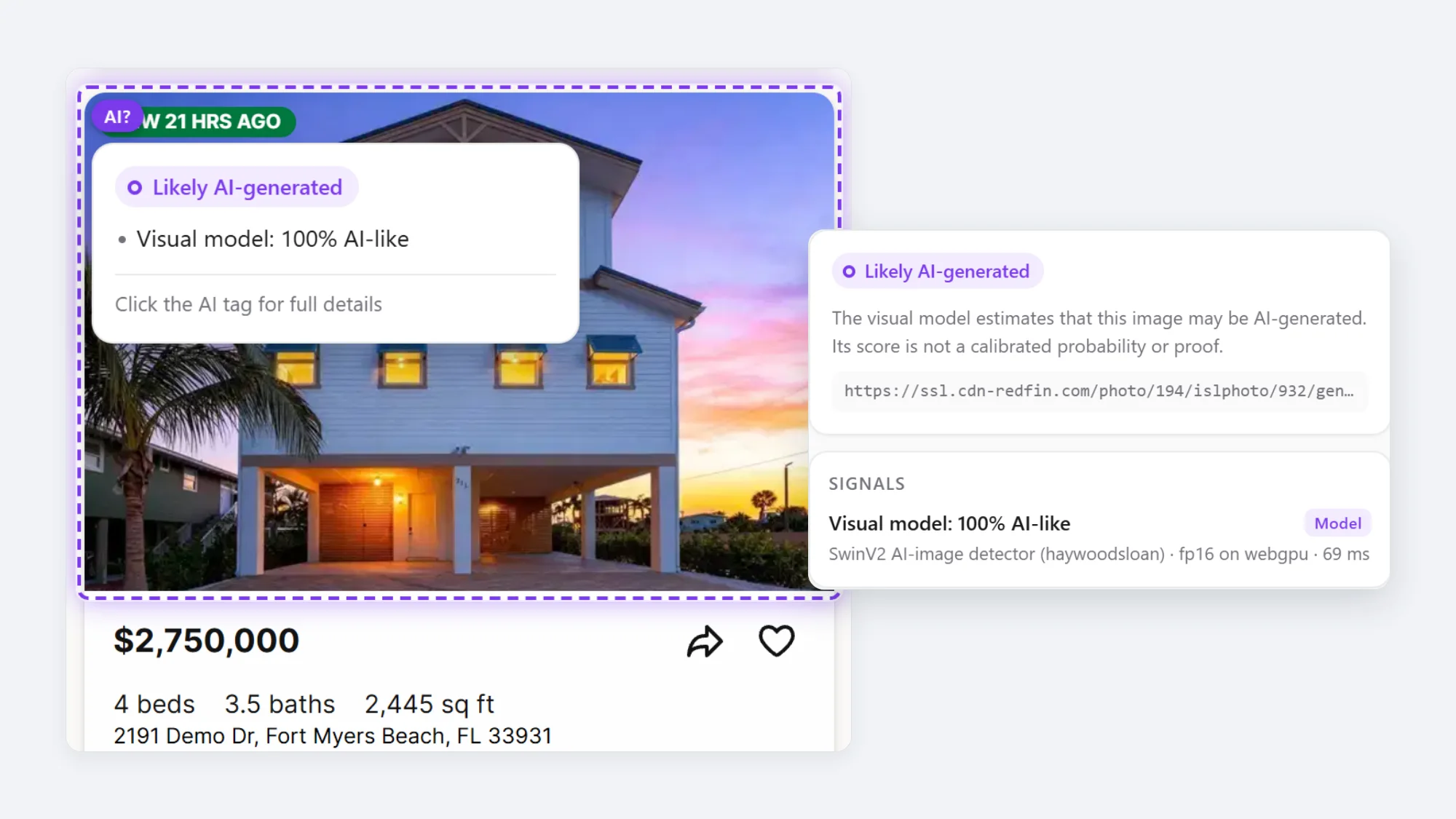
Hikaku outlines photos that look AI-made as you scroll through listing sites, and clicking the outline shows why. It can't tell virtual staging apart from full AI generation, and it is sometimes wrong, so use it to find the photos that deserve a second look. For a broader checklist, see how to tell if a photo is AI-generated.
Common questions
Is virtual staging allowed?
In most places, yes, as long as it is disclosed. Many MLSs require virtually staged photos to be labeled, and staging must not hide a property's condition. Rules vary by area, so check your local MLS.
How can you tell if a house photo is virtually staged?
Look for a label first. Then check whether furniture casts shadows that match the room's light, whether rugs sit flat, and whether the furniture is the right size for the space. Identical decor across several listings is another sign.
What is virtual twilight?
A daytime photo edited to look like it was taken at dusk, with a new sky, darker surroundings and lit windows. It is cheaper than a real twilight shoot and is often done with AI.